



The complete guide
Pillow Protectors Explained, And How To Pick A Set That Lasts
The problem nobody thinks about until they look inside a pillowcase
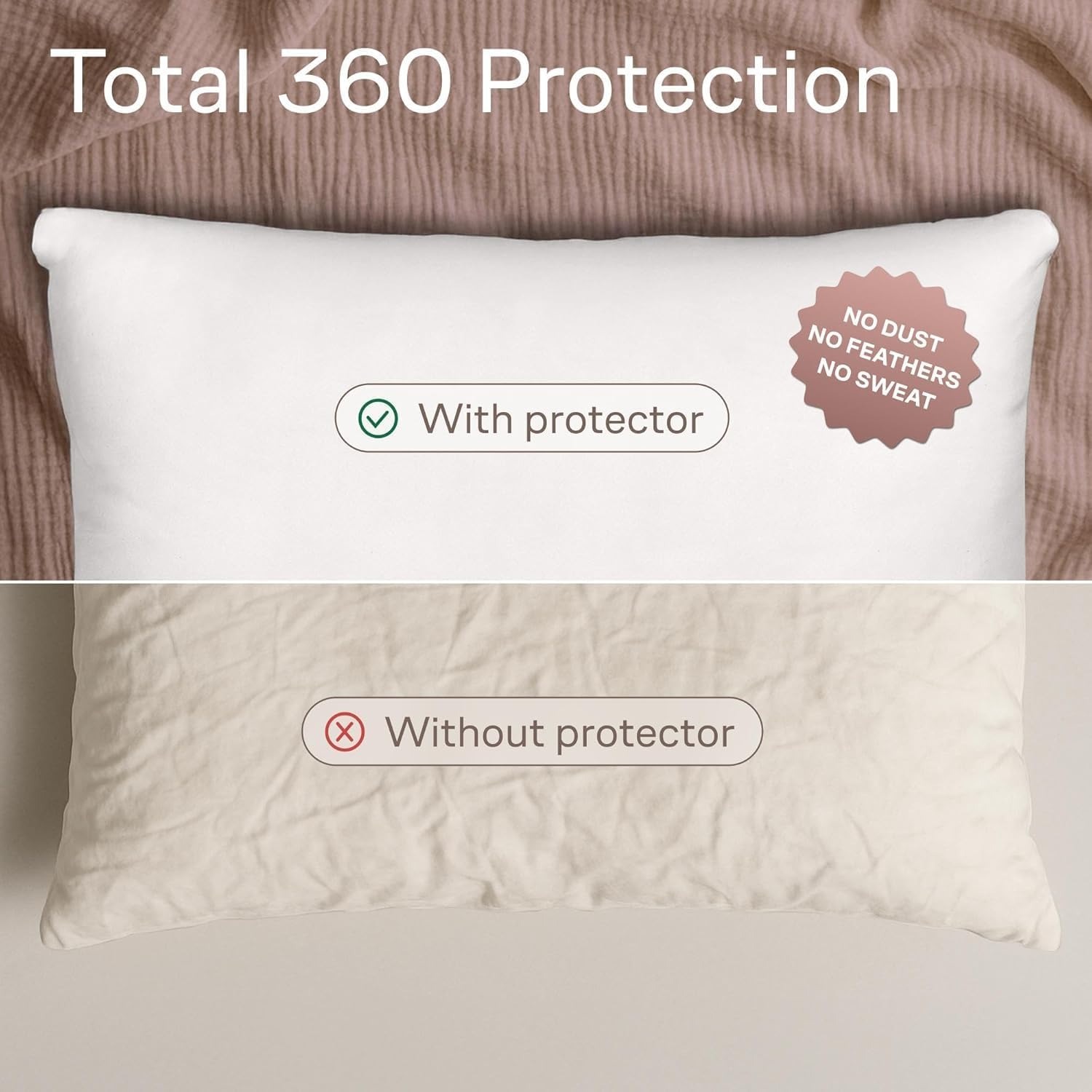
Pull the case off a pillow that has been in use for a year and you will usually find a story written in pale yellow. That is not neglect. It is hair oil, moisturiser, sweat and skin, all of which pass straight through a thin cotton pillowcase and settle into the pillow underneath.
The awkward part is that a pillow is one of the hardest things in the house to clean properly. Some can be washed, many cannot, and even the washable ones take a full day to dry out and often come back with the fill clumped unevenly. So the pillow gets quietly replaced instead, long before the fill has actually worn out.
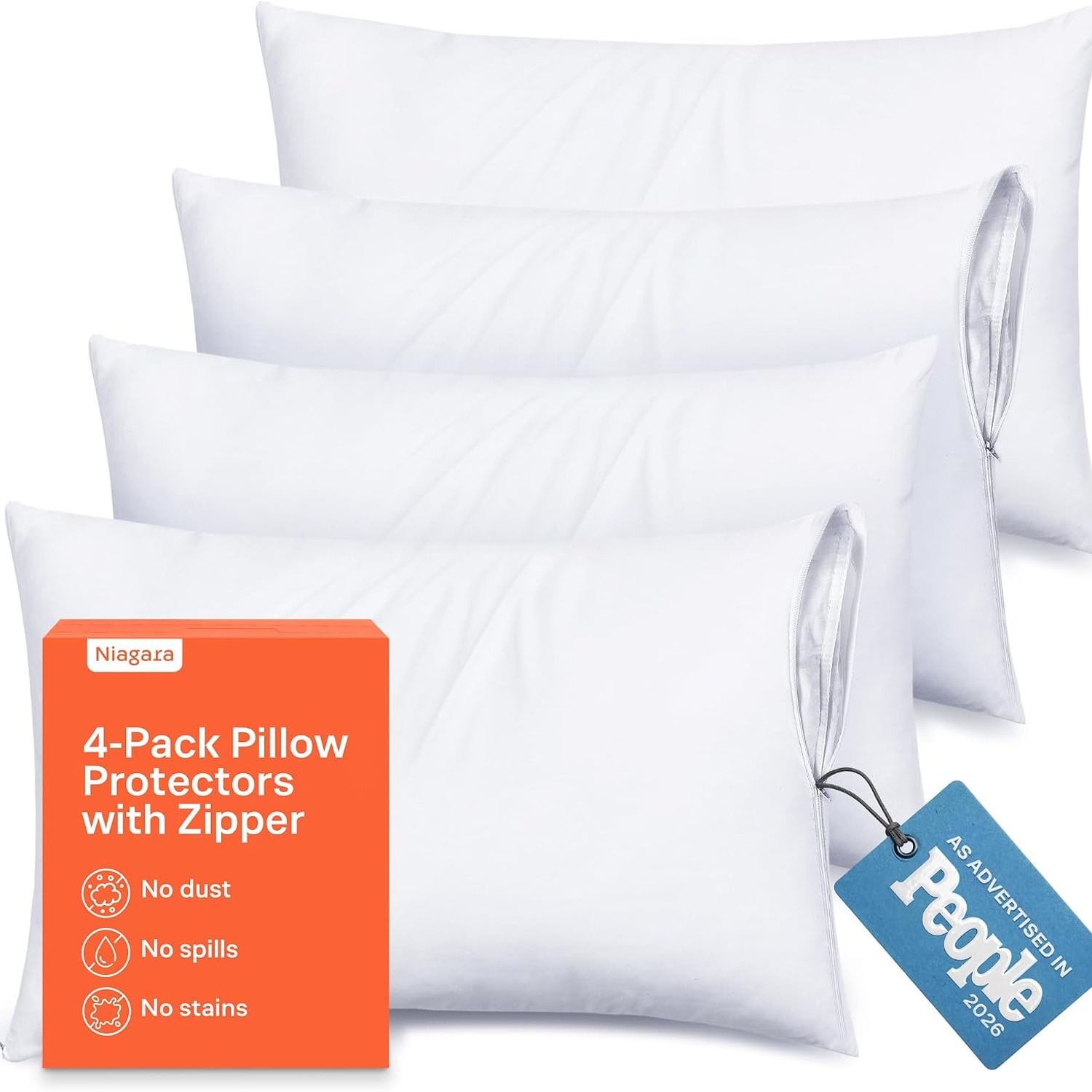
A zippered pillow protector interrupts that cycle. It is a thin, fully enclosed cover that goes on the pillow first, with your normal pillowcase over the top. It catches the mess, and you wash the cover instead of the pillow.
How a zippered protector actually works
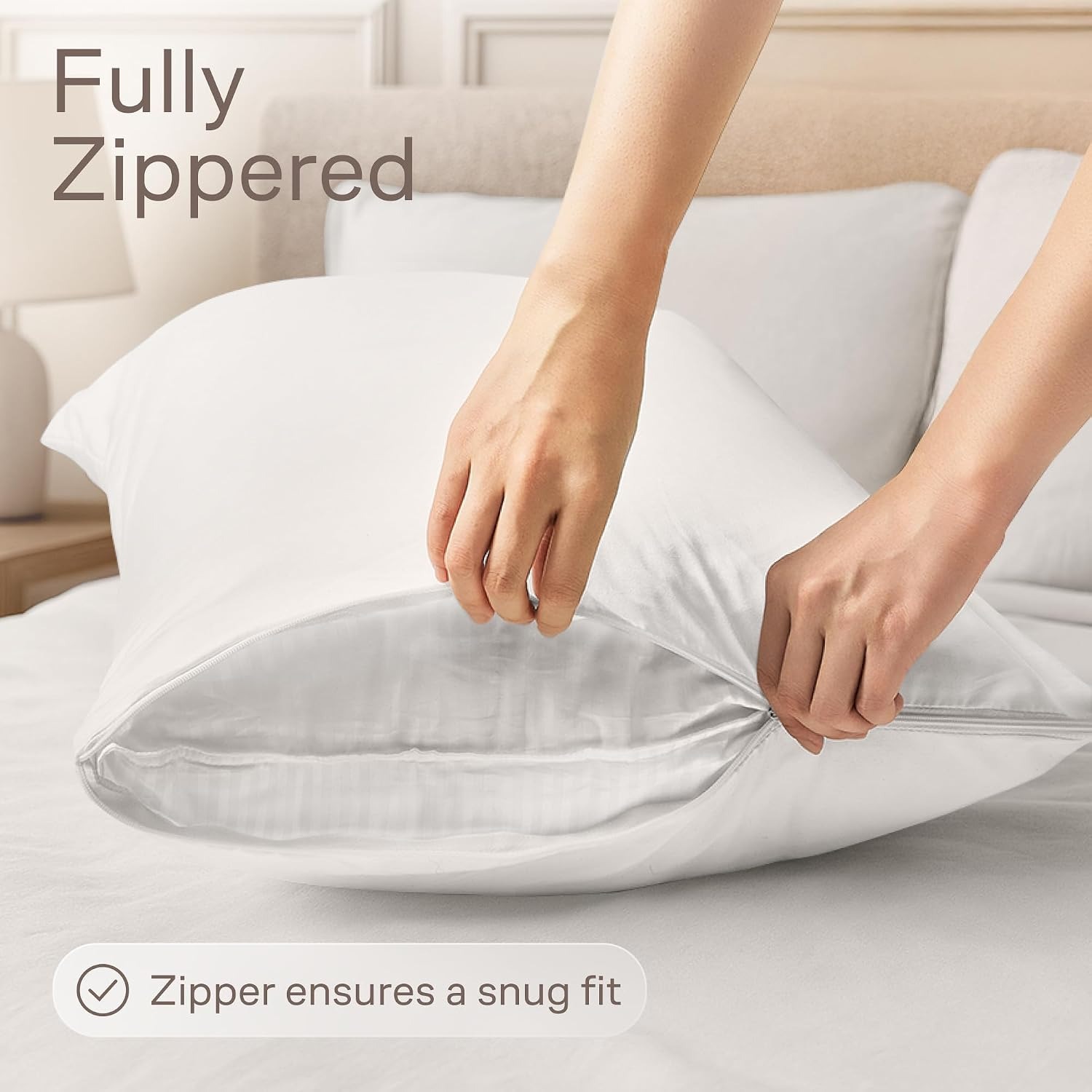
The design is simple. A rectangle of fabric sewn into a sleeve, with a zip running along one side seam so the pillow can be fully enclosed rather than left open at one end.
That full enclosure is the whole point. An open-ended protector, the kind that just slips on, leaves a gap where dust and debris work their way in over time. A zip closes the pillow in on all sides. The zip on this set is described as auto-locking, which means the slider stays where you leave it instead of gradually working open as the pillow gets punched into shape each night.
The side placement matters too. A zip at the end of the pillow ends up near your face. A zip along the side sits out towards the edge of the bed, which is both more comfortable and easier to hide once the pillowcase goes on.
Fabric, and why thread count comes up
This set uses microfibre at a 300 thread count. Microfibre is a very fine synthetic yarn, and when it is woven tightly it produces fabric that feels smooth and sits flat.
Thread count is a rough measure of how tightly woven the fabric is. At the cheap end of the protector market you get loose, papery fabric, and that is where the common complaints come from. People say they can hear the protector when they turn over, or that it bunches into ridges inside the pillowcase and they can feel every one. A tighter weave at 300 behaves more like ordinary bed linen. You put a pillowcase over it and you stop noticing it exists, which is really the best outcome you can ask for.
The colour is white. That is standard for protectors because white does not shadow through a thin or light-coloured pillowcase. If you have ever seen a faint grey rectangle through a white cotton case, that is a dark protector showing itself.
Getting the size right
These are standard size, measuring 66 cm by 50.8 cm. Before you order anything, strip a pillow bare and measure it flat, corner to corner, in both directions.
Pillow sizing is not consistent across brands or countries, and the words on the packaging are not always reliable. A pillow sold as standard in one range can be noticeably longer than one from another. If your measurement comes out close to 66 by 50.8, you are fine. The fabric has a little give and a protector is meant to fit snugly.
Depth is the other thing to check, and people forget it. A very thick or contoured foam pillow can measure correctly in length and width and still refuse to zip, because the loft takes up fabric that would otherwise go around the ends. If you are working with a deep pillow, allow for that.
Who gets the most out of a set like this
Anyone replacing pillows more often than they would like. If you have bought new pillows in the last two years because the old ones looked grim rather than felt flat, a protector will change the maths for you.
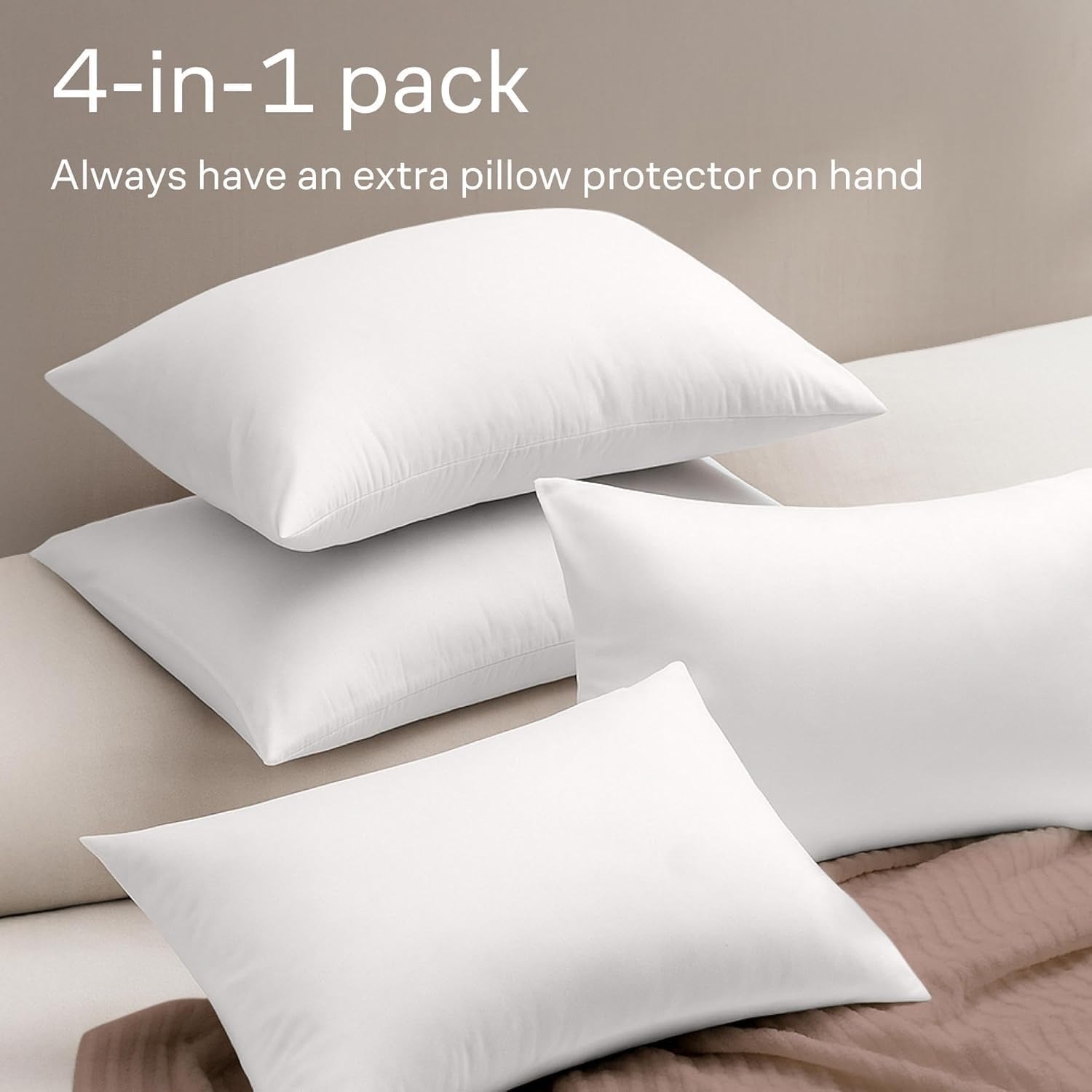
Households with guest rooms benefit in a different way. Guest pillows sit unused for weeks and then get a night or two of heavy use. Being able to strip the protector, wash it and have the pillow ready again is far easier than wondering whether the pillow itself needs attention. A four pack covers a guest room and a main bedroom at once.
Parents find them useful for the obvious reasons. Children's bedding meets spills, nosebleeds and illness, and a washable barrier between the mess and the pillow saves a lot of hassle.
And if you have just spent real money on good pillows, a protector is the cheapest insurance you will ever buy for them. The cover costs a fraction of the pillow and takes all the wear.
How to choose between protectors
A few things separate a good set from a disappointing one.
Closure comes first. Look for a zip rather than an open envelope end, and check where the zip sits. Side seam beats end seam for comfort.
Then fabric. You want something woven rather than laminated. Plastic-backed protectors do block liquid, but they trap heat and they crackle, and most people give up on them within a week. A tightly woven microfibre is the compromise most sleepers prefer, because it is quiet and it breathes.
Then quantity. Protectors are only useful if they are on the bed, and they are not on the bed while they are in the wash. A multi pack lets you swap instead of wait. Four is a practical number for most homes.
Lastly, check what is actually claimed. A protector is a fabric cover. Treat big promises on a pillow cover with some suspicion, and buy on fit, feel and build instead.
Looking after them
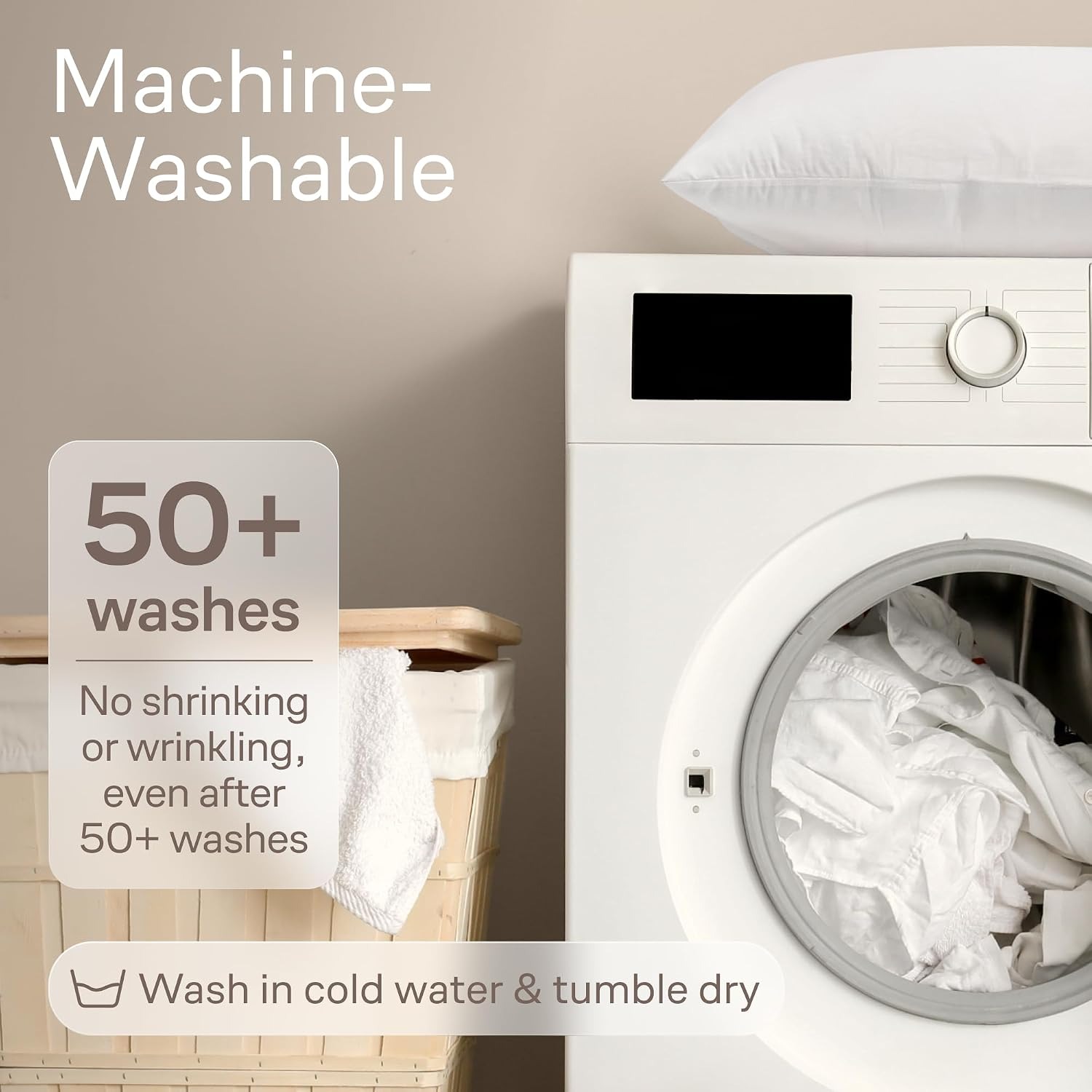
Machine wash with similar colours, close the zip first, and dry on low heat or on the line. That is genuinely all there is to it.
Closing the zip before washing is the one step people skip and later regret. An open slider catches on sheets and towels in the drum and can pull threads or damage itself. Two seconds at the laundry basket prevents it.
Wash them on the same rhythm as your sheets. For most homes that lands somewhere around every one to two weeks, more often in hot weather or when someone in the house has been unwell. Make sure the cover is completely dry before the pillow goes back inside, because sealing any dampness into a pillow is exactly what you are trying to avoid.
Keep the spare pair folded flat in the cupboard. They take almost no space, and having them ready is what makes the routine stick.
The short version
A pillow protector is a cheap layer that takes the daily wear so the pillow does not have to. This set gives you four standard size covers at 66 cm by 50.8 cm, made from 300 thread count microfibre in white, each closing with an auto-lock zip on the side seam.
Measure your pillow first. Fit the protector before the pillowcase. Wash both with your sheets. Do that and your pillows stay in better shape for longer, with very little effort on your part.