



The complete guide
How to Choose a Latex Travel Pillow That Is Actually Worth Packing
The problem with most travel pillows
Anyone who has slept away from home more than a few times knows the feeling. You arrive somewhere, lie down, and the pillow is wrong. It might be a flat foam slab in a hostel, a pile of lumpy polyester in a rental, or nothing at all because you are in a tent. So you try a travel pillow, and that brings its own disappointment. The cheap ones squash down to nothing within an hour. The inflatable ones squeak and sweat. The good ones are often too big to justify carrying.
That gap is what a compact latex travel pillow is trying to close. The idea is simple. Take the fill that works well in a real bed pillow, shred it so it bends, and shrink the whole thing to a size you can pack. You lose some surface area. You keep the support and the airflow.
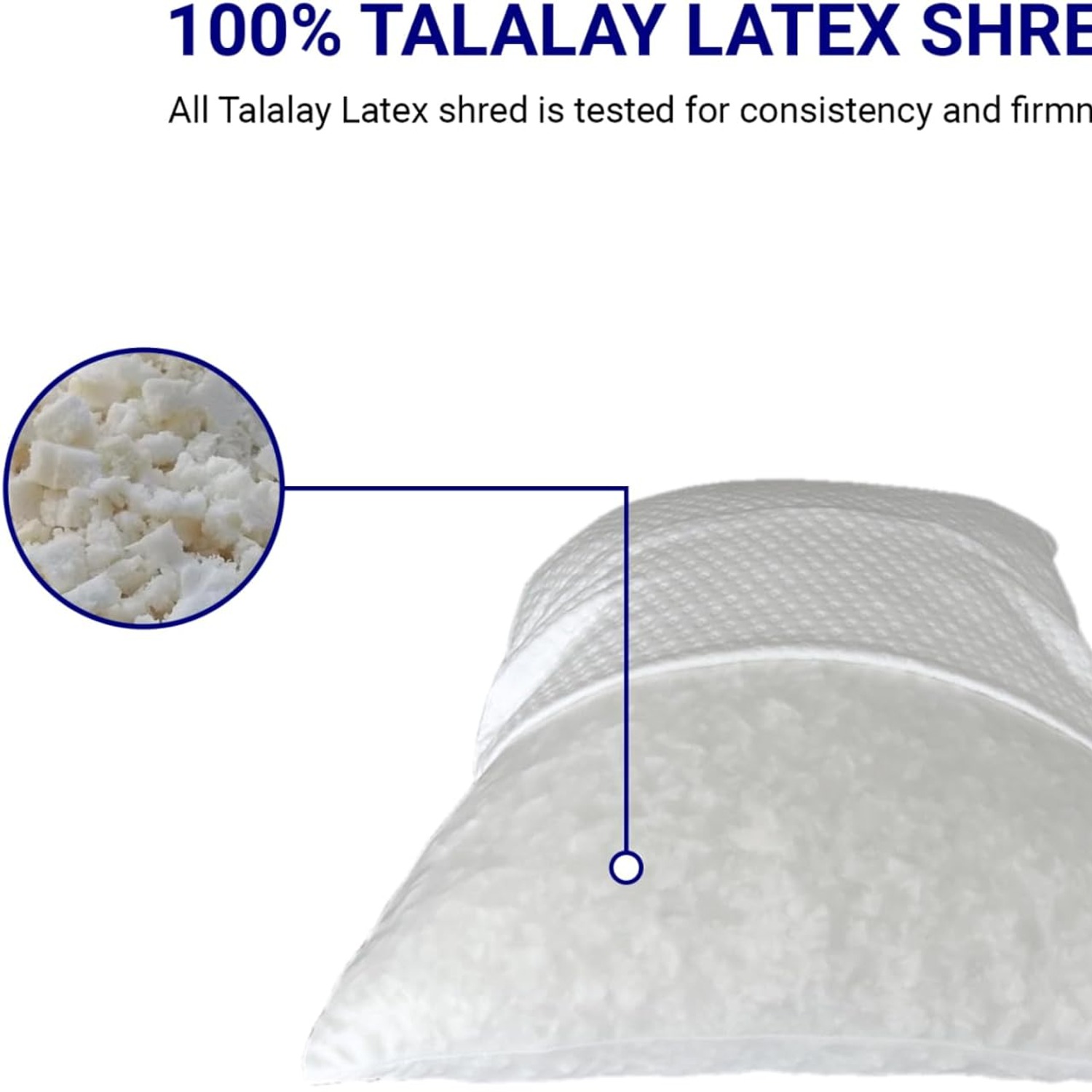
What shredded Talalay latex actually does
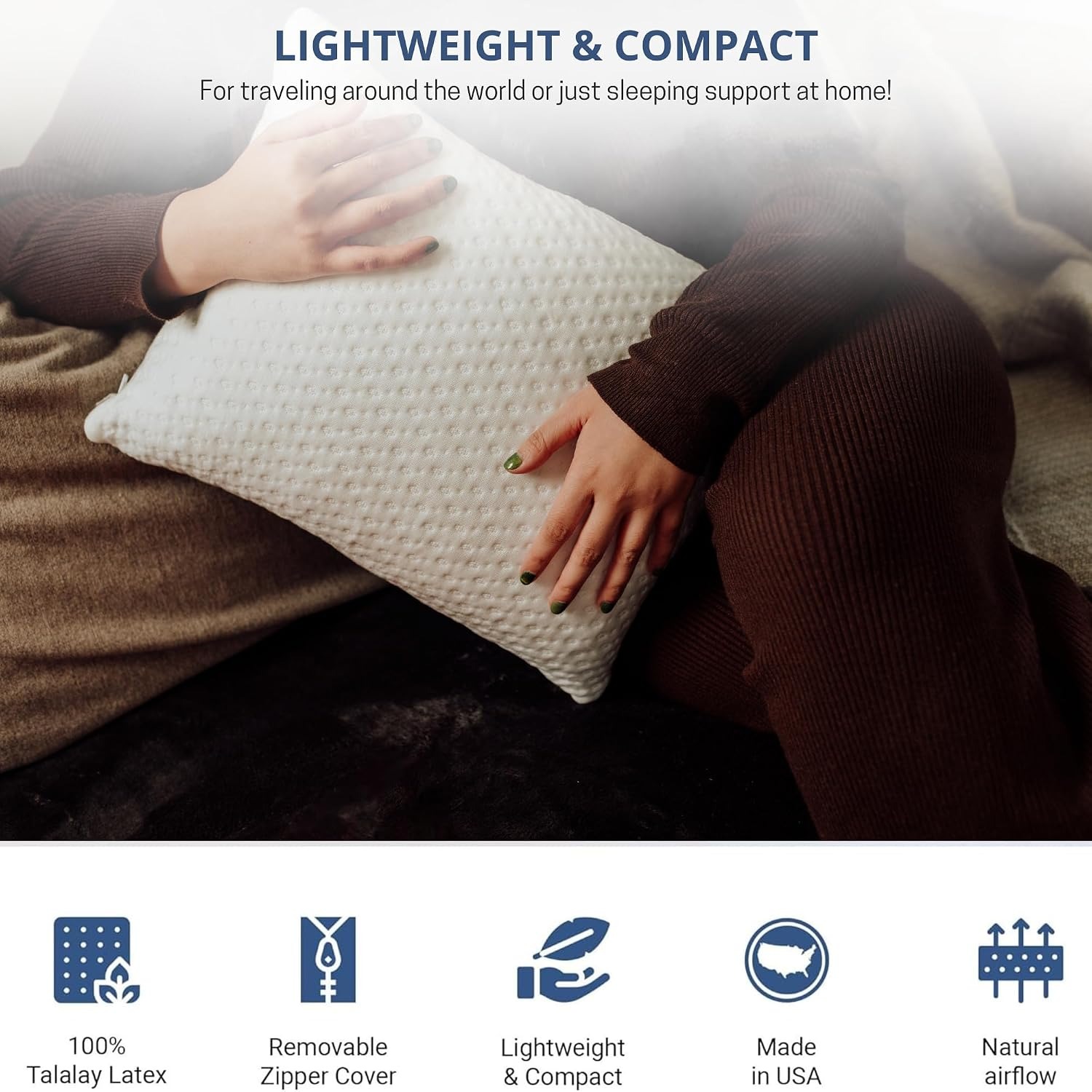
Talalay is a way of making latex foam. The important part for a pillow is the result, an open-cell structure. The material is full of tiny air pockets that connect to each other, so air can pass through the foam rather than sitting trapped inside it. That is why latex generally feels less stuffy than a dense block of memory foam.
Shredding that foam into pieces changes how the pillow behaves. A solid latex core holds a fixed shape, which is lovely on a bed and hopeless in a backpack. Shredded fill moves. The pieces slide against each other, so the pillow folds when you roll it and springs back when you let go. It also means the fill shifts a little under your head instead of pushing back as one rigid surface.
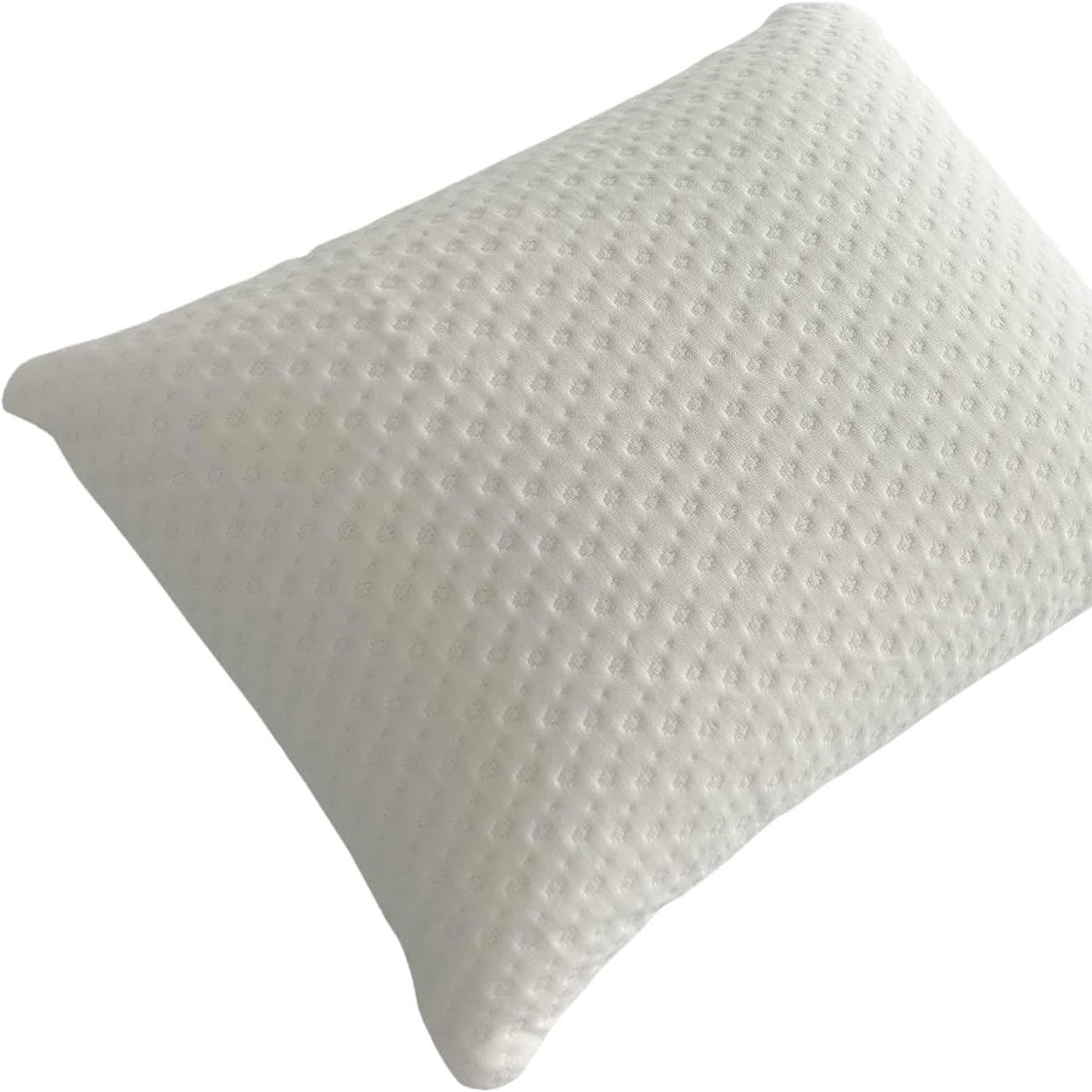
This pillow uses 100% Talalay latex as the fill, with a rubber cover and a zip closure. Firmness is listed as medium, which is the sensible setting for travel. You cannot predict whether you will be on a firm hostel mattress, a sagging sofa bed or a foam camp mat, and a medium pillow copes with more of those situations than a very soft or very firm one would.
Size, loft and why the shape matters
The listed dimensions are 40.6 cm long by 13 cm wide, with a thickness of 5.75 inches. Read that again, because the shape tells you a lot. It is long and narrow, not square. Think of a bolster more than a standard pillow.
Narrow works in the places you travel. In a sleeping bag there is not much room beside your head anyway. In a car it sits between your neck and the window without spreading across the seat. On a train it tucks into the corner. The trade-off is that you need to stay on it. If you move around a lot at night you will find the edges sooner than you would on a full-size pillow.
The thickness is where the real comfort comes from. At 5.75 inches this has proper loft, which matters most to side sleepers. When you lie on your side, the gap between your ear and the mattress is roughly the width of your shoulder, and a thin pillow leaves your head tilted down into that gap. A pillow with loft fills it. Back sleepers need less, and some back sleepers will find a medium-loft pillow like this one on the taller side, especially on a soft surface that lets their head sink.
Weight is listed at 1.5 pounds, about 0.68 kg. Carrying that in a daypack is nothing. Carrying it on a multi-day hike where every gram counts is a different conversation, and an ultralight hiker would probably still choose an inflatable. For car camping, caravans, flights, trains and hotel stays, the weight is a non-issue.
The carry bag is doing more work than you think
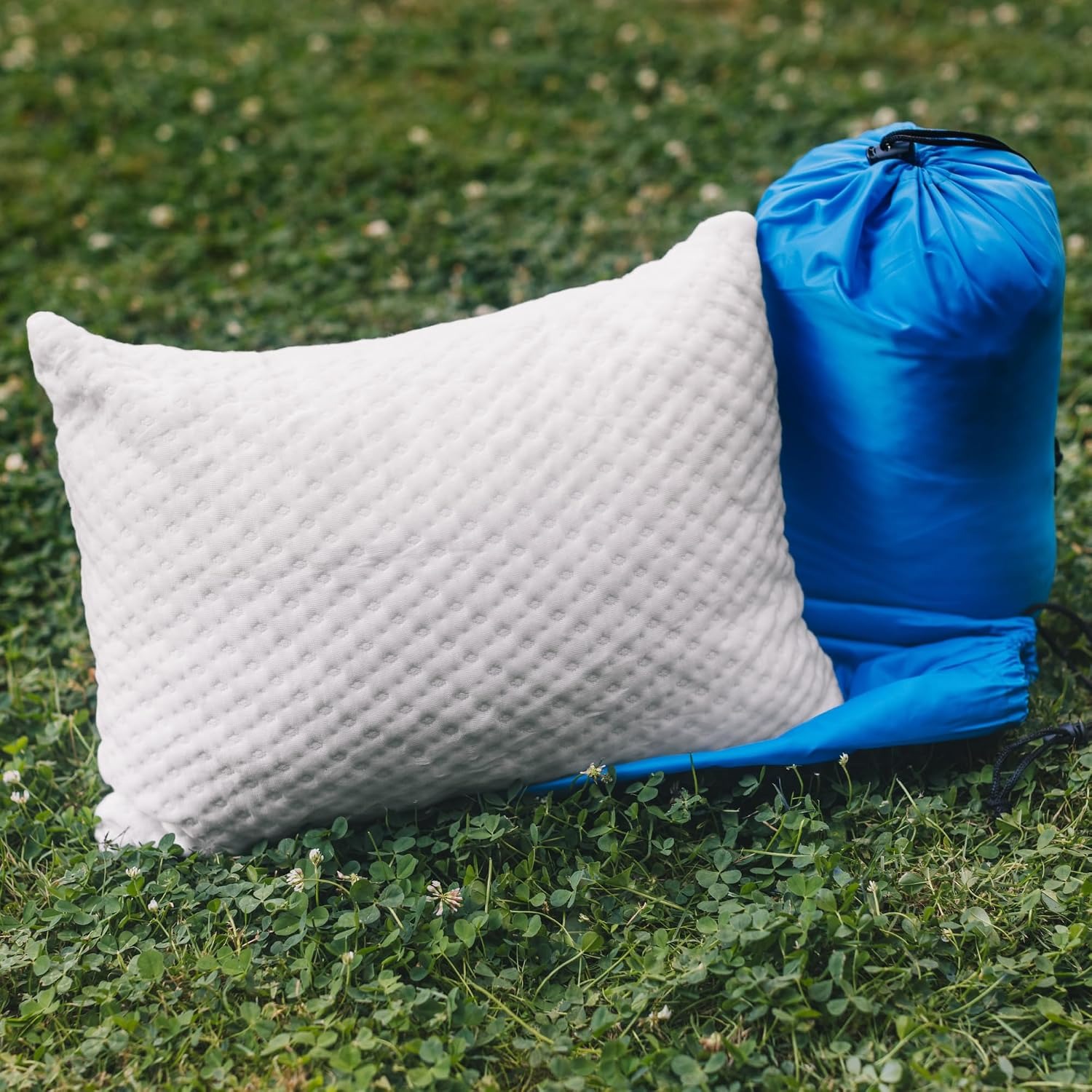
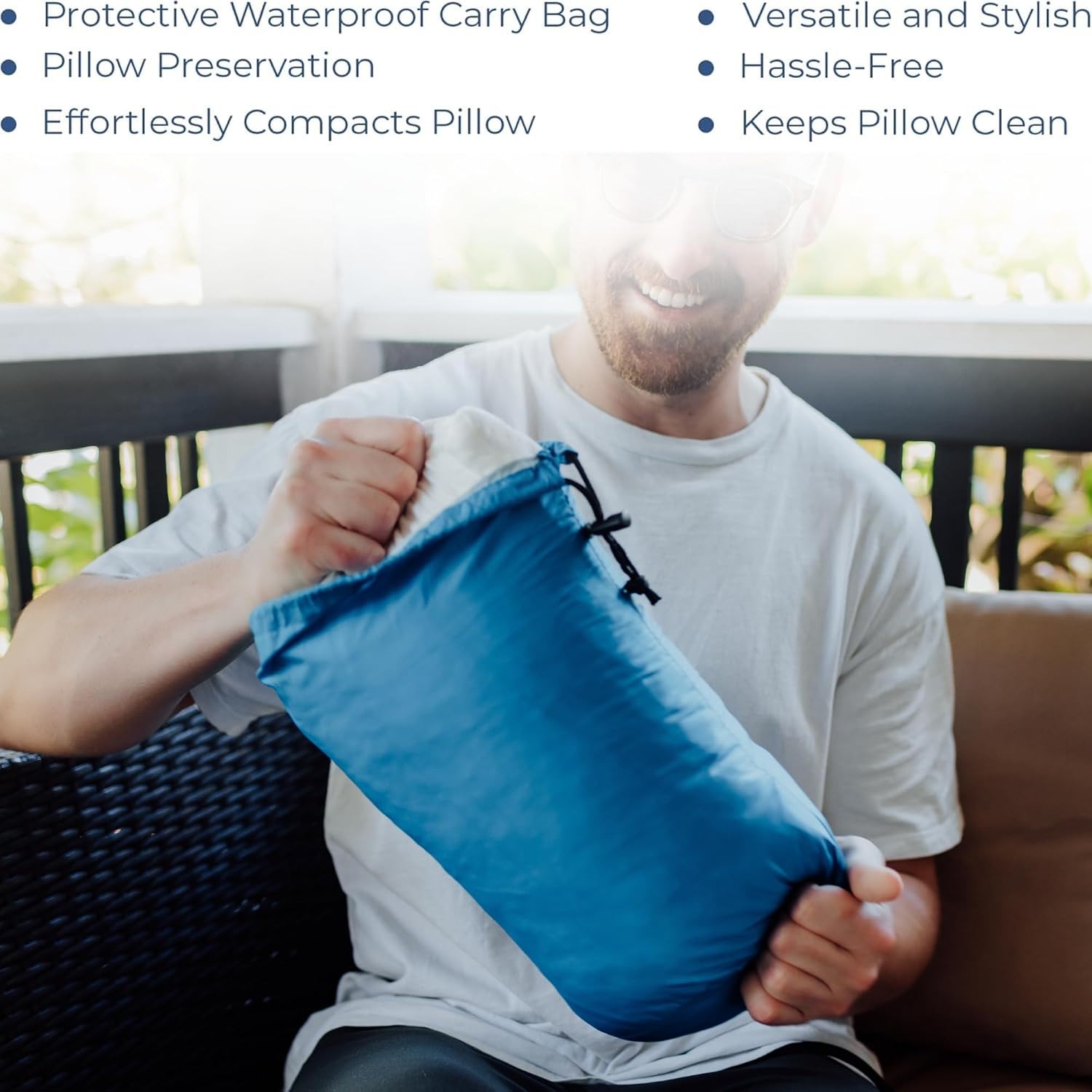
A water-resistant carry bag comes with the pillow. It is easy to dismiss as a freebie, but it changes how you use the thing.
First, it shrinks the packed size. You bend the pillow, push it in, and the shredded fill lets it compress into something far smaller than its open shape. That is the difference between the pillow living in your bag and living in the cupboard.
Second, it keeps the pillow dry. Tent floors get damp. Car boots leak. Bags get set down on wet grass at a campsite. A water-resistant bag means the pillow is not absorbing all of that. Latex holds moisture and takes a while to dry, so keeping it dry in the first place is the easy win.
Third, it keeps the pillow clean. Nobody wants to pull their head pillow out of the same compartment as their hiking boots.
Who this suits, and who it does not
It suits people who sleep away from home regularly and are tired of making do. Caravanners and van travellers who need storage that disappears when the bed folds away. Festival and camping people who want something better than a rolled-up jacket. Anyone doing long drives who wants something between their neck and the headrest. Guests who bring their own pillow because they know how badly they sleep on a strange one.
It is less suited to a few situations. If you want a U-shaped neck collar for sleeping upright on a plane, this is not that shape. If you want a full-size pillow for everyday use at home, it is too narrow, although plenty of people keep one on the couch for reading or naps. And if you have a diagnosed latex allergy, do not use a latex product at all. The fill and cover are both latex based.
Care, in plain terms
Hand wash only. That is the care instruction on this pillow and it is worth taking seriously. Latex does not survive a washing machine drum, and tumble dryer heat will do it no favours either.
The practical routine is this. Keep a pillowcase on it whenever you sleep on it. Spot clean marks with a little mild detergent and cool water, rinse the spot properly so no soap is left behind, and let it air dry in a shaded, airy place. Not in a sunny window. Direct sun and heat are the two things that age latex fastest.
Before you pack it back into the bag, make sure it is fully dry. Sealing a slightly damp pillow into a water-resistant bag for a week is how you create a smell you cannot get out. Give it a shake and an airing when you get home, then store it loose if you have the space.
How to compare options before you buy
If you are weighing this against other travel pillows, four things decide it.
Fill type tells you how it will feel and breathe. Shredded latex bends and allows airflow. Solid foam holds shape but packs badly. Polyester fibre packs well but flattens quickly. Air pillows are the lightest and the least comfortable.
Loft tells you whether it will work for your sleep position. Side sleepers need more, back sleepers need less, and stomach sleepers usually want the flattest thing they can find.
Packed size tells you whether it will actually come with you. A pillow that stays at home is no pillow at all.
Care tells you how long it will stay pleasant. Hand wash only is more work than machine washable, but a removable cover and a pillowcase take most of the sting out of it.
The short version
This is a small, medium-firm pillow with real loft, filled with shredded 100% Talalay latex, measuring 40.6 cm by 13 cm at 5.75 inches thick and weighing about 0.68 kg. It bends into a water-resistant bag so it packs down, the open-cell latex lets air through, and the zippered cover comes off for hand cleaning.
Buy it if you travel often and want something better than whatever pillow you find when you get there. Skip it if you need a U-shaped neck pillow, if you count grams on long hikes, or if you have a latex allergy. For most trips, it is the pillow that makes the strange bed feel a bit more like yours.